Monday, 12 November 2012

Setting New Goals


In response to our meeting with our creativity tutor we have developed some new goals to focus on:

  • To promote the use of different languages in the classroom; in response to the diverse languages of this class in particular we are going to try to use a Picture book written in French. The justification for this approach is to raise the profile of the students who have English as an additional language. One pupil in particular is newly arrived and we want to illustrate the way in which stories can be enjoyed and read in a different language. Additionally this strategy also reflects how it might feel to read a text in an unfamiliar language. 
  • One of our long-term aims is the use of the Magpie Books in school. We hope that this strategy will be one of our legacy's. Consequently we are thinking about hosting a whole-school assembly about the children's work this term and their use of their Magpie Books. This is something we will need to discuss with their class teacher. 
  • Lastly, we are about to implement a 'Writing Wall' in the classroom. This wall is going to be changed every 1-2 weeks to stimulate interest and motivation. The wall will contain an interesting stimulus to promote creative writing. This week we are providing a range of examples to start the children off. A carefully selected image will be the starting point for the children's writing as they attempt to write a 'Drabble' (a short, no more than 100 word piece of writing). 


The Reading Box


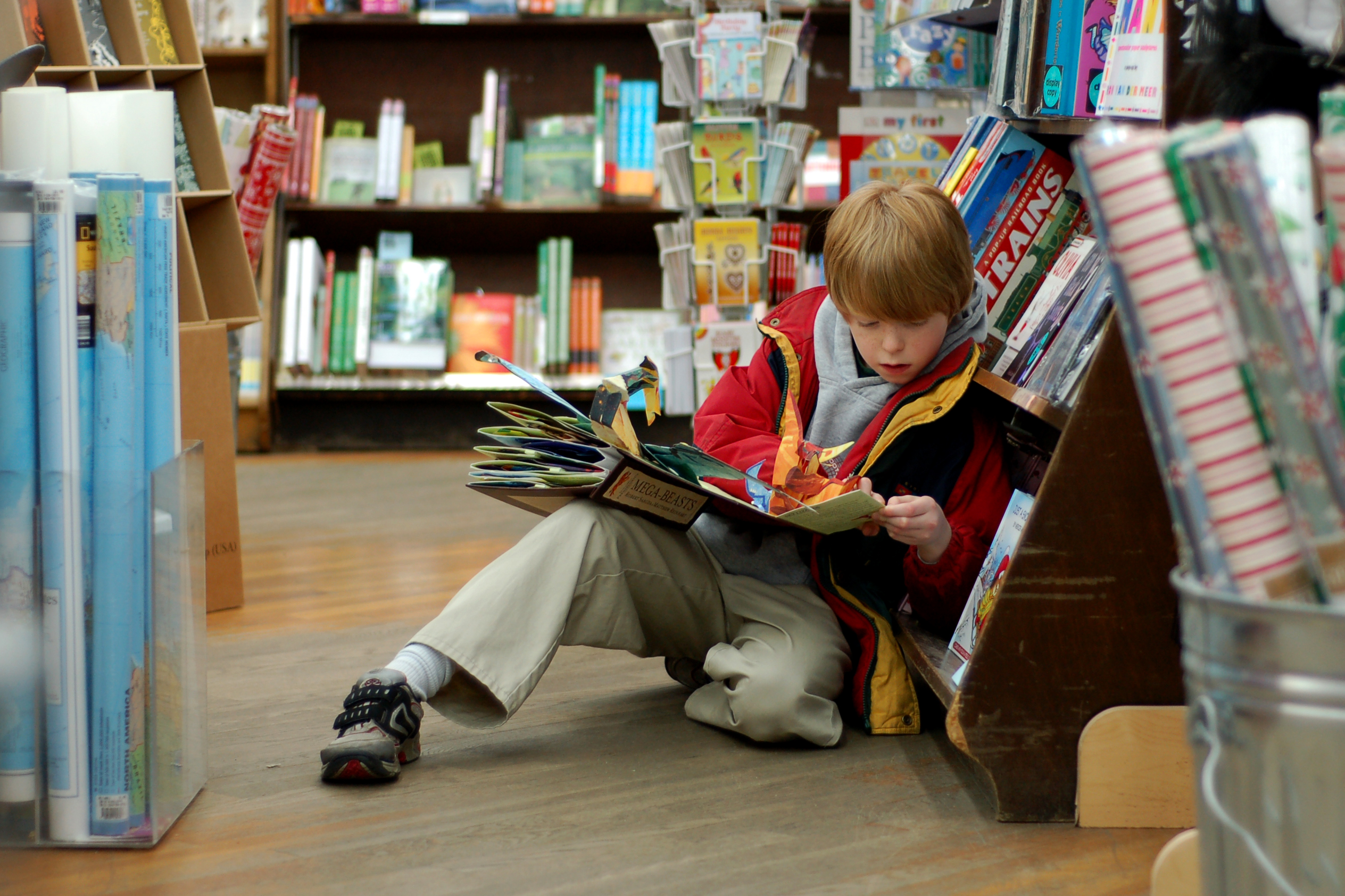
In response to the 40-50 texts we took into the class four weeks ago we have heard some positive responses to our endeavours. The idea was to stimulate the children's imagination by providing them with a wealth of books from a variety of genres. We know that when children have good reading habits their writing improves. As Collins (2003) discusses when children read quality texts their work drastically improves, their ability to construct sentences, select more interesting vocabulary and sustain genre specific language features are enhanced. So we were delighted to hear that the teacher had actively allowed time in the school day for the children to select a new book and enjoy reading it. This change is noted by the shift in reading habits of the class. As we go into school tomorrow we will be analysing the children's 'Book list' to see what genres they have enjoyed the most.

ICT Opportunities


Tomorrow the class are coming to visit the University in order to use the ICT facilities we have. When we first surveyed the class they reported that they really wanted to type more of their work. Due to lack of space/funding the school currently does not have many ICT facilities. So we have invited and arranged for the class to come here instead. These visits are occurring regularly until Christmas at the moment. We are assisting in walking the class to and from the university each week and have also undertaken a risk assessment for this to happen. Tomorrow we shall report back on the success of this endeavor!

The importance of ICT in children’s learning is highlighted by Bearne & Wolstencroft (2007) who discuss the significant changes in technology over the last decades which have had a significant impact on the use of everyday writing and text. Furthermore, Bearne (2004) points out that children are using digital technologies to access a variety of texts at home and ‘there is a pressing issue about the relationship between kinds of reading and writing fostered in schools and this experience’ (ibid, p. 19). Mills (2010) also discusses the important role ICT plays in most children’s everyday lives and argues that teachers must include new ‘digital media to make connections between the learning spaces of home and school’ (ibid, p. 35).

Waugh & Jolliffe (2008) discuss the positive impact ICT can have on pupil's learning. Using ICT can help to improve 'pupils' levels of concentration, self-confidence, self-esteem, independence and behaviour’ (ibid, p. 229). Moreover, ICT can have benefits for learners with special educational needs and those learners who may be reluctant.

Through the visits we hope to show the school that using ICT has many benefits so that they can develop the use of ICT in the future when the school is better equipped.


Thursday, 8 November 2012

Talk for Writing

The Philosophy for Our Project


The philosophy for our objectives are linked to theory and have been developed through creativity and thoughtful reading. As the children in this Year 6 class displayed signs of being reluctant writers, in some regards, we have tried to engage the class in writing activities which have a genuine purpose (Riley, 1999). The concerns from the class teacher were not isolated as the report from Ofsted 'English at the Crossroads' (2009) found; children's overall ability in writing is far lower than their ability in reading, and as such the government has responded to this lack of attainment. 

We decided to survey the class to seek reasons for their lack of motivation and then set goals with their interests in mind (Chamberlain, 2007).  A central feature of the project has been to develop 'Talk for Writing', however it is noted that effective and confident talk can only prosper in a climate where children feel able to make mistakes when thinking aloud (Dass and Kaur, 1999). Despite the factors that limit effective talk it is "...widely regarded by educators as an indispensable base for reading and writing" (Crowhurst, 1993, p. 24). When children have an open dialogue with one another they can become partners in engaging critically with their ideas (Cox, 2011). The children highlighted that they wanted to share their ideas with partners more often in class. In response we designed and produced a selection of literacy warm-up games. These starters are intended to be used to fire children's brains up and are developed by Pie Corbett. An example is provided from the 'Everybody Writes' website. 

Ink Waster  

To warm up the brain and get into a creative mood - give the children a topic and ask them to write as much as they can in, say, one minute.  Time them and ask them to count the number of words then try again with another topic. They should write as rapidly as possible. This limbers up and frees up the mind. 


Tuesday, 6 November 2012

Project Objectives


For any project to be successful, we first need to outline our objectives. As a group we have collectively decided upon the following:

  1. To broaden children's reading habits.
  2. To improve their attitudes towards writing.
  3. To implement strategies and resources to support areas of writing children find challenging.
  4. To inspire children to become effective, creative and confident writers.
We feel that these objectives encompass our passion and motivation for the project and we hope to achieve these.


Sunday, 21 October 2012

Popping in...


On Tuesday 16th, we visited Year 6 again to feedback what we had gathered from our last visit. We discussed what they had told us about writing and that we planned to change the negatives into positives and really try to change the way they felt about writing. The class seemed excited at the prospect of a new way of teaching and learning, and we can only hope that we keep that excitement going.

We also delivered new gifts into the classroom; a pack of literacy games filled with short, snappy starters or filler games that encourage vocabulary development, grammar skills or imagination. A set of word mats that are bursting with explanations on punctuation, grammar and prefix's and suffix's, as well as a range of connectives and tricky 'wow words'. We feel that both these resources will really benefit the children and their writing in the long run, here is hoping they get a lot of use out of them!

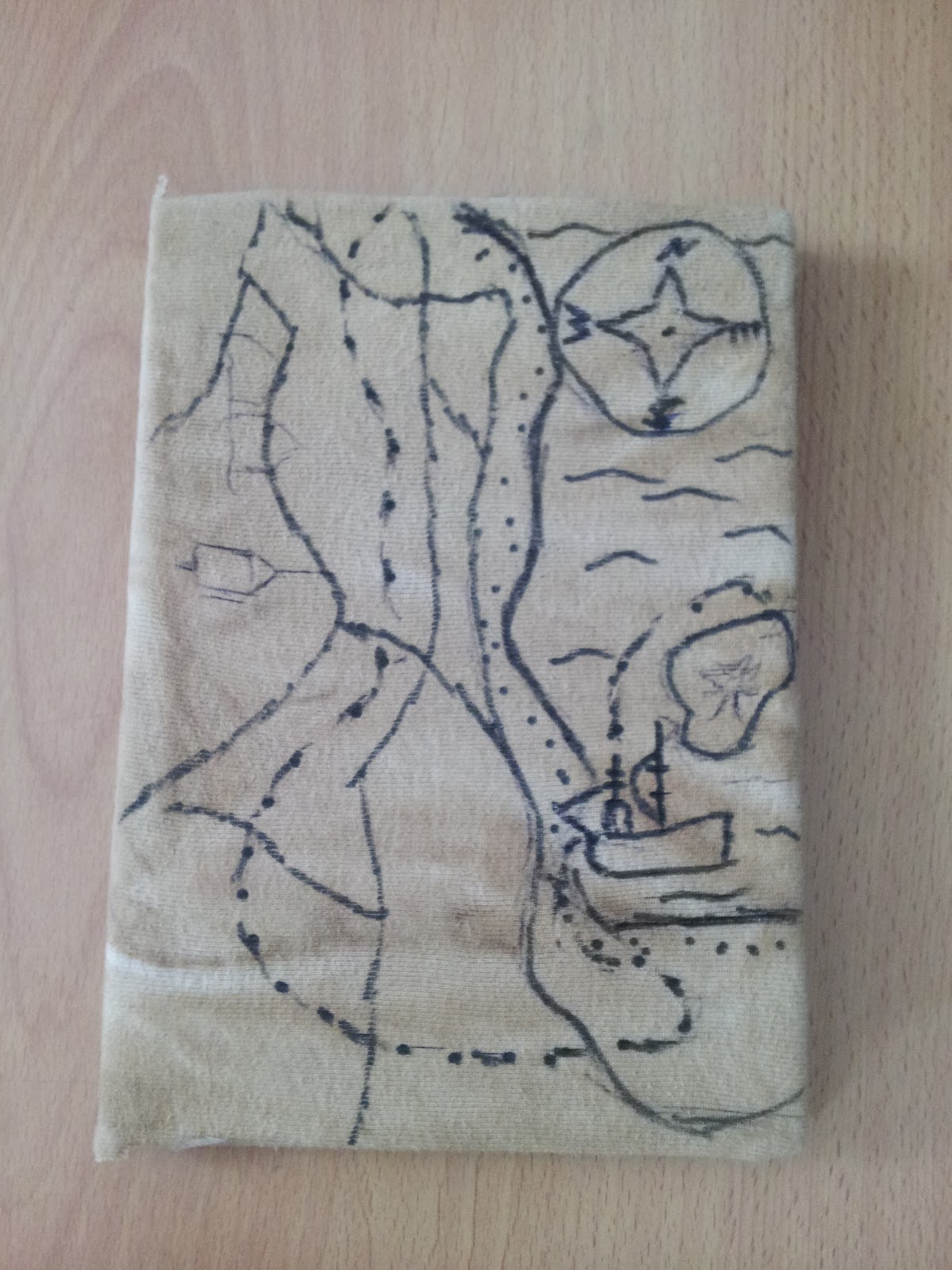
Furthermore we asked for their updates on how their Magpie Books and reading books were going. We were very pleased to find that both were being used brilliantly, and the vast majority of children had their Magpie Books covered and slowly filling up with insightful and interesting ideas. The reading books are going just as well as we had hoped, with most of the class having read at least one book already.

However, as we had predicted the children seemed to struggle to discuss the books in a useful and knowledgeable way. Because we had anticipated this, Emi and I had prepared a short role-play on 'book talk', to give the class a feel for how it is done. We quickly discussed the classes current fiction text 'Kensuke's Kingdom', considering our favourite parts of the story and what made those parts so engaging, speculating what might happen next, as well as contemplating on how we might feel if we were the main character. We then set the class off to discuss (hopefully in the same manner as we did) one of the reading books they had read, giving their opinion as to whether it should be recommended or not. This was a really useful activity for us too, as we were able to find out what genre of books seemed to be the most popular and therefore, try to find some more for the class (comics).

The principles of 'book talk' can encourage children's deduction, inference and awareness of text-types, whilst also fostering a love of books. For us to understand the main issues and themes of a text we need to be able to discuss them (Bunting et al., 2005). Debating ideas in a text promotes children's critical responses and allows us to questions how a writer has made us feel and how we can do the same in our own writing (ibid). In this sense, no matter in what context we write, we are always borrowing the bits of books we have read (Booth, 2001).


Although only a short visit, we really enjoyed seeing how the class was getting on and seeing our small introductions flourish and begin to impact upon the group. We have high expectations of this project and we hope to fulfil them!


Here are a few of the decorated 'Magpie Books' given with permission from their owners. We were extremely pleased to see that the majority of the class wanted to have their book photographed and to show-off what they had done.


"He who has imagination without learning, has wings and no feet."


Joseph Joubert


I noticed this quote and it made me think about the relationship between imagination and learning. In a seminar the other week, me and the cohort had a debate as to whether imagination is a skill or not. I believe it is, as it's something that is grown and developed over time. Yet, the lecturer raised a valid point, that most very young children have an imagination of their own. Maybe it's a gift, that if lost, must be relearned, and strengthened through practise and use. 


In relation to this project I think this debate is a useful one, the class teacher mentioned to us on our first visit that his class, although a young Year 6, were lacking in imagination. This was evident in one of our literacy games, 'Excuses'. We asked the class to finish the sentence 'I was late for school because...' to be completed with the most ludicrous and unbelievable excuse they could think of. Thus, demonstrating their creativity and imagination. 

Some found the task easy and were able to really get going, yet others struggled to extend their ideas or even begin. I believe that this is going to be one hurdle we might struggle with. If imagination is a skill to be learnt, do we have the time or chance to develop it? And what if we don't? How can we expect their writing and feelings towards writing to improve if they don't have one of the corner stones of writing?Looks like this is a debate that needs to be continued... (Rosie)